In a world buzzing with distractions, mindfulness art emerges as a delightful oasis for the overwhelmed soul. Imagine transforming your stress into creativity with just a brushstroke or a splash of color. This isn’t just about painting pretty pictures; it’s about finding zen while channeling your inner Picasso.
Table of Contents
ToggleWhat Is Mindfulness Art?
Mindfulness art offers a unique approach to creative expression, helping individuals find tranquility amidst their busy lives. This practice fosters a deeper connection with oneself through artistic endeavors.
Definition and Concept
Mindfulness art integrates the principles of mindfulness with creative processes. It involves being fully present while engaging in artistic activities, such as painting, drawing, or sculpting. This practice allows individuals to focus on their sensations, thoughts, and emotions without judgment. In this state, artists often experience enhanced clarity and inspiration, enabling them to express their inner feelings more authentically. Art becomes a vehicle for self-discovery, inviting individuals to explore their creativity without the pressure of expectations.
Importance of Mindfulness in Art
Mindfulness significantly enriches the artistic experience. Cultivating mindfulness helps reduce stress and anxiety, making space for creativity to flourish. By embracing the present moment, artists find solace and release from daily distractions. Enhanced awareness during the creative process equips individuals to connect emotionally with their work. This connection often leads to deeper, more fulfilling artistic expressions. Practicing mindfulness in art also promotes mental well-being, resulting in a holistic approach to creativity that nurtures both the mind and spirit.
Benefits of Mindfulness Art
Mindfulness art offers various advantages that enhance both creativity and emotional well-being. Engaging in this practice supports individuals in transforming their mental state while fostering self-awareness.
Enhancing Creativity
Creativity flourishes when individuals immerse themselves in mindfulness art. This type of artistic expression allows for unrestricted exploration of thoughts and feelings. Participants concentrate on the present moment instead of seeking perfection in their work. Creating without judgment opens new pathways for innovation. Artists often discover fresh ideas and unique perspectives by letting go of preconceived notions. Engaging in painting, drawing, or sculpting leads to a deeper connection with one’s intrinsic creative self. As a result, individuals experience heightened inspiration and a richer artistic journey.
Reducing Stress and Anxiety
Mindfulness art effectively reduces stress and anxiety levels. Participants focus on sensory experiences, allowing thoughts to flow without resistance. This practice encourages relaxation, as creating art helps to quiet racing minds. Breathing deeply and concentrating on colors or shapes enhances feelings of tranquility. In turn, individuals find solace in the act of creation, which serves as a therapeutic outlet. Consistent engagement in mindfulness art promotes emotional processing, fostering resilience against daily pressures. Ultimately, this creative practice contributes to improved mental health and overall well-being.
Techniques for Practicing Mindfulness Art
Practicing mindfulness art involves several techniques that enhance the creative experience while promoting presence and awareness.
Focused Breathing
Focused breathing serves as a foundation for mindfulness art. It encourages individuals to connect with their breath before starting any creative activity. Breathing deeply helps calm the mind and center thoughts, preparing for an artistic journey. Inhale slowly through the nose, allowing the abdomen to rise. Exhale gently through the mouth, releasing tension with each breath. This rhythmic process fosters relaxation and clarity. Engaging in focused breathing improves concentration, enabling artists to immerse themselves fully in their work. As the mind quiets, creativity can flow more freely, enhancing both the artistic output and the overall experience of creation.
Visual Journaling
Visual journaling invites individuals to express thoughts and emotions through images and symbols. Artists can dedicate time to filling a journal with drawings, sketches, or collages that reflect their inner feelings. This technique allows for exploration without constraints, emphasizing self-discovery and emotional release. Participants can combine words with visuals, linking concepts that resonate with them. Using various materials promotes playful experimentation, enriching the experience. Visual journaling encourages spontaneity, leading to surprising insights and discoveries. Engaging regularly in this practice helps establish a deeper connection with one’s artistic self while supporting emotional wellness.
Mindfulness Art Activities
Mindfulness art activities provide various ways to engage creatively while maintaining presence. Participants can choose from a variety of methods, each fostering a deeper connection with their artistic selves.
Drawing and Painting
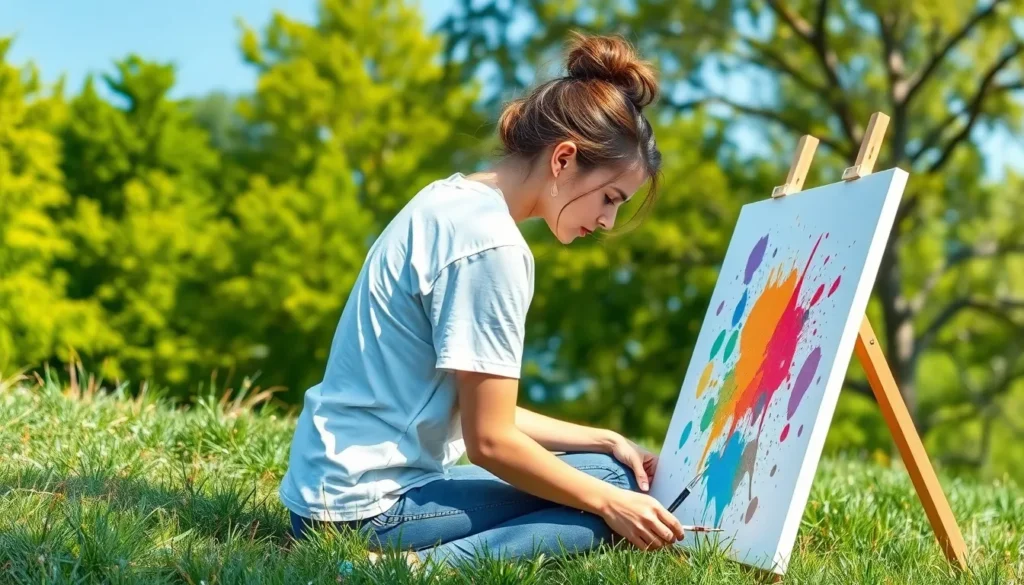
Drawing and painting serve as popular mediums for mindfulness art activities. Creating spontaneous sketches or detailed illustrations allows artists to express emotions freely. Focusing on brush strokes or pencil movements enhances awareness of the creative process. Individuals can explore different colors and techniques without the worry of perfection, making mistakes part of the journey. Engaging in this art form can lead to moments of discovery, encouraging reflection on feelings and thoughts. Choosing to work in a serene environment amplifies the calming effects of the practice.
Sculpture and Mixed Media
Sculpture and mixed media offer tactile experiences that deepen mindfulness engagement. Working with clay, wood, or recycled materials allows for a hands-on connection to creativity. Maintaining focus on textures and forms stimulates a sense of grounding. The process of shaping and molding materials invites individuals to express their inner visions and emotions. Incorporating different materials encourages experimentation, promoting innovative ideas. Taking breaks to reflect on one’s work enhances self-awareness and emotional processing, integrating mindfulness into artistic practice.
Mindfulness art stands out as a powerful tool for personal growth and emotional healing. By integrating creativity with mindfulness practices, individuals can unlock new dimensions of self-expression and clarity. Engaging in this art form not only alleviates stress but also cultivates a deeper understanding of one’s emotions and thoughts.
As participants explore various techniques and mediums, they discover the joy of creation without the constraints of perfection. This journey fosters a unique bond between the artist and their work, enriching both the creative process and overall well-being. Embracing mindfulness art can lead to transformative experiences that resonate far beyond the canvas.