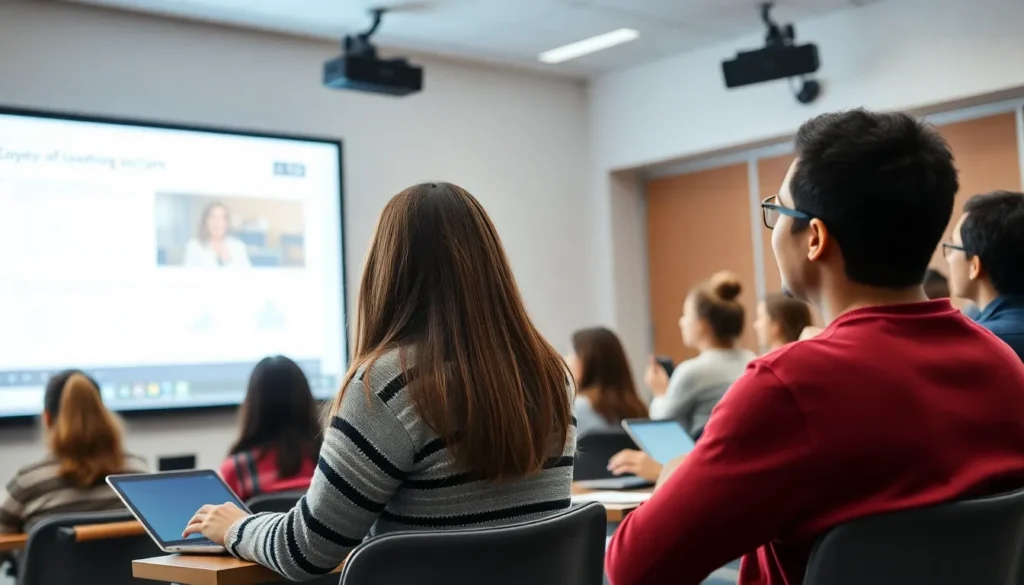
In the fast-paced world of academia, keeping up with lectures can feel like trying to catch a greased pig at a county fair. Enter lecture capture technology, the superhero of the classroom. It swoops in to save students from the clutches of missed notes and fuzzy memories, all while letting professors focus on what they do best—teaching.
Imagine having the power to rewind time, reliving those enlightening moments in class from the comfort of your couch. Lecture capture technology makes that dream a reality. It records lectures, making them accessible anytime, anywhere. This isn’t just a convenience; it’s a game-changer for academic success. With this tech by their side, students can tackle complex subjects with confidence, knowing they can revisit that brilliant explanation whenever they need a refresher.
Table of Contents
ToggleOverview of Lecture Capture Technology
Lecture capture technology encompasses systems and software that record audio, video, and presentation materials during lectures. Students access these recordings later for review and study. Content stored in various formats, including videos and transcripts, provides flexibility for learners.
This technology offers several components, such as digital recording systems, streaming capabilities, and editing tools. Recording systems capture live sessions, while streaming features allow real-time viewing from any location. Editing tools enable instructors to refine content, adding annotations and highlights.
Features of lecture capture systems enhance student engagement. Students can pause, rewind, or fast-forward recordings. Such capabilities enable them to focus on specific sections that require additional attention. Additionally, these systems support a variety of devices, ensuring compatibility and accessibility for all users.
Benefits extend to educators as well. Instructors can review their teaching methods, identifying areas for improvement. Analytics dashboards provide insights into student engagement with recorded materials, allowing educators to adjust their teaching strategies accordingly.
Integration with learning management systems simplifies access to recorded lectures. Students can easily find and navigate lecture materials within familiar platforms. Furthermore, some systems offer automated captioning, promoting inclusivity for students with hearing impairments.
Overall, lecture capture technology significantly impacts academic life. Its innovative capabilities support enhanced learning experiences, academic retention, and expanded resources for both students and instructors.
Benefits of Lecture Capture Technology
Lecture capture technology significantly enhances academic life by improving the overall learning experience for students and educators alike.
Enhancing Learning Experiences
Lecture capture technology provides students with the ability to revisit lectures at their own pace. Recordings allow students to pause and review complex topics, enhancing comprehension and retention. Students access materials anytime, facilitating flexible study schedules that cater to individual needs. These recordings become vital resources for exam preparation and understanding difficult concepts. Educators benefit as well, gaining insights into their teaching methods through analytics that gauge student engagement and comprehension.
Supporting Diverse Learning Styles
Different students absorb information in various ways. Lecture capture technology addresses these diverse learning styles by offering multiple formats for engagement. Visual learners enjoy recorded lectures with integrated presentation materials, whereas auditory learners benefit from clear audio recordings. It accommodates kinesthetic learners by allowing them to interact with recorded content at their convenience. Features like automated captioning further support those with hearing impairments, ensuring inclusivity for all students. Overall, this technology fosters a supportive learning environment tailored to various educational needs.
Challenges in Implementing Lecture Capture Technology
Implementing lecture capture technology presents several challenges that institutions must navigate.
Technical Limitations
Technical limitations often hinder the full potential of lecture capture systems. Inadequate bandwidth affects video quality, leading to frustrating viewing experiences. Compatibility issues may arise when integrating various software and hardware systems. Accessibility can also pose challenges, especially for mobile devices. These factors can restrict the overall effectiveness of lecture capture technology, impacting both student engagement and teaching methods.
Faculty and Student Adaptation
Faculty and student adaptation present hurdles when introducing lecture capture technology. Instructors may resist using new tools out of comfort with traditional teaching methods. Some faculty members might lack the necessary training, impacting their confidence in utilizing the technology effectively. For students, adjusting to recorded lectures requires developing self-discipline and effective study habits. Institutions must invest in training programs and support resources to facilitate seamless adaptation for both educators and learners.
Future of Lecture Capture Technology in Academia
Lecture capture technology is set to evolve significantly in the coming years. Emerging trends promise to enhance the learning experience through advanced features and capabilities.
Innovations on the Horizon
Next-generation lecture capture systems are incorporating artificial intelligence for automated transcription and content tagging. These advancements will facilitate easier navigation of lecture materials, enabling students to find relevant segments quickly. Enhanced analytics tools, driven by machine learning, promise to provide educators with deeper insights into student engagement metrics. Additionally, new integration capabilities with virtual and augmented reality platforms will create immersive learning experiences. Expect gamification elements to be integrated, making lectures more interactive and engaging for students. Such innovations can lead to improved retention rates and a more dynamic classroom environment.
Impact on Teaching Methodologies
Incorporating lecture capture technology alters traditional teaching methodologies. Educators can embrace flipped classroom models, shifting the focus from direct instruction to more collaborative, student-centered learning. Lecture recordings allow instructors to spend more time facilitating discussions and addressing individual student needs. Customizing content delivery becomes more feasible, as faculty can tailor recorded materials to suit diverse learning styles. Furthermore, access to lecture recordings encourages continuous academic improvement, as educators can reflect on their teaching practices. Overall, these shifts enhance the learning experience by increasing accessibility and fostering a more interactive classroom atmosphere.
Lecture capture technology is reshaping the academic landscape by enhancing accessibility and engagement for both students and educators. Its ability to provide flexible learning options empowers students to take control of their education, while educators benefit from valuable insights into teaching effectiveness. As institutions continue to invest in this technology, the potential for innovation grows, leading to more interactive and personalized learning experiences. Embracing these advancements not only addresses current challenges but also sets the stage for a more dynamic and inclusive academic environment. The future of education is bright with lecture capture technology at the forefront, paving the way for enhanced learning outcomes and improved academic success.