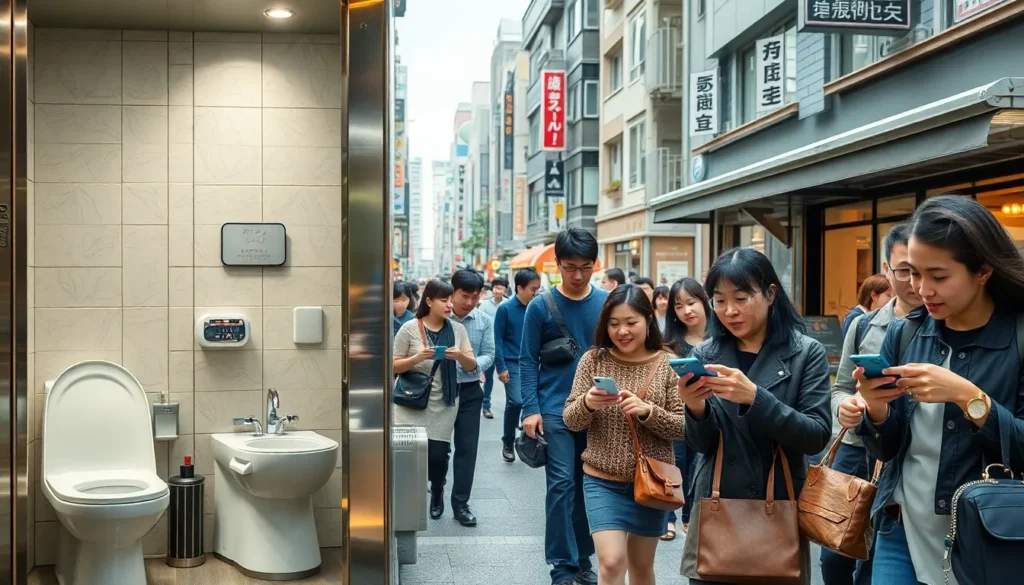
In a world where technology often feels like a sci-fi movie, Japan stands out as the ultimate star of the show. From robot waiters serving sushi to smart toilets that could probably give a TED talk, daily life in Japan is a tech lover’s dream. Imagine waking up to a home that knows your coffee preference better than your best friend.
Japan’s innovative spirit doesn’t just stop at quirky gadgets; it seamlessly integrates into everyday routines, making life smoother and a whole lot more fun. Whether it’s navigating the bustling streets of Tokyo with a smartphone app or enjoying a high-tech train ride that’s more punctual than your morning alarm, Japan’s tech transforms the mundane into the extraordinary. Buckle up as we explore how these advancements shape daily life and why they’re worth a closer look.
Table of Contents
ToggleJapan Technology in Daily Life
Japan’s high-tech innovations redefine everyday experiences. Smart toilets exemplify this transformation. These toilets offer features like heated seats, integrated bidets, and automated cleaning systems. Such advancements enhance comfort and hygiene in bathrooms.
Additionally, apartment buildings often include robot waiters. These robots deliver food and drinks directly to residents, streamlining service in eateries and homes. Contactless technology also thrives in Japan, especially during public transit. Commuters use IC cards to access trains, buses, and even convenience stores, making transactions seamless.
Moreover, smartphones facilitate communication and accessibility. Advanced applications help navigate city life, while translation tools break language barriers for tourists. Apps also remind users of appointments and manage daily tasks effectively.
Robotics and artificial intelligence integrate deeply into various sectors. Many businesses use chatbots to handle customer inquiries. Healthcare settings also utilize robotic assistance for surgeries and patient care, demonstrating innovation in improving services.
Furthermore, Japan’s focus on punctuality shines through its efficient train systems. The Shinkansen, or bullet trains, boast impressive average speeds of 186 mph. Frequent schedules ensure minimal wait times, enhancing travel convenience.
In shopping centers, augmented reality and virtual fitting rooms provide unique experiences. Shoppers can visualize products and receive tailored recommendations through immersive interfaces. Such technology revolutionizes retail interactions and boosts consumer satisfaction.
Japan exemplifies how technology seamlessly weaves into daily routines. Each innovation enhances life quality, showcasing the country’s commitment to advancement and efficiency.
Smart Homes and Automation
Automation in Japanese homes showcases technology’s vast potential. Smart home systems integrate various devices to create a seamless living environment.
Home Assistants
Voice-activated home assistants enhance everyday convenience. These devices manage tasks such as setting reminders, controlling lighting, and playing music. Integration with other smart devices allows users to adjust temperatures or lock doors using simple voice commands. Popular options include Amazon Alexa and Google Assistant, both playing key roles in daily routines. Users benefit from their capabilities, including language translation and information retrieval. An increasing number of households adopt these technologies, illustrating their growing importance in Japanese life.
Smart Appliances
Smart appliances revolutionize kitchen tasks and comfort. Refrigerators equipped with AI can monitor contents and suggest recipes based on available ingredients. Ovens allow users to control cooking times and temperatures remotely, ensuring meals are prepared perfectly. Washing machines now feature intelligent cycles that optimize energy and water use. Smart coffee makers offer programmable settings for personalized brewing experiences. The proliferation of these devices contributes significantly to energy efficiency and time savings, underscoring Japan’s focus on innovation in domestic settings.
Transportation Innovations
Japan showcases a wealth of transportation innovations that enhance daily life through efficiency and convenience.
High-Speed Rail Systems
Shinkansen trains represent the pinnacle of high-speed rail technology. Capable of reaching speeds up to 320 km/h, these trains offer unmatched punctuality and comfort. The extensive network connects major cities, allowing travelers to move efficiently across the country. Integration with local transit systems ensures smooth transfers, making navigation seamless. Comfort features include spacious seating and onboard amenities that enhance the journey experience. All these factors contribute to Japan’s reputation for advanced transportation solutions.
Electric and Autonomous Vehicles
Electric vehicles gain popularity in Japan, reflecting a commitment to sustainability. Numerous manufacturers produce electric models, supporting a growing trend towards eco-friendly transportation. Advanced charging infrastructure enables easy access to charging stations, promoting widespread adoption. Meanwhile, autonomous vehicles are on the horizon, with ongoing tests in urban environments. Such innovations promise to improve safety and reduce traffic congestion through smart technology. These advancements cultivate a future where transportation aligns with environmental goals while enhancing everyday mobility.
Communication Advancements
Japan showcases impressive communication advancements that integrate seamlessly into daily life. These technologies greatly enhance interaction and connectivity among individuals.
Mobile Technology
Mobile technology drives much of Japan’s communication landscape. Smartphones equipped with advanced features offer a range of applications for both locals and tourists. Navigation apps help users find their way in complex urban environments. Language translation applications break down barriers, allowing visitors to communicate easily. High-speed internet connectivity ensures that individuals stay connected, whether at home or on the go. The prevalence of mobile payment systems simplifies transactions, making it convenient to make purchases using just a smartphone. Overall, mobile technology significantly influences how people communicate and interact in Japan.
Social Media Trends
Social media trends thrive in Japan, reflecting the country’s tech-savvy population. Platforms like Twitter, Instagram, and LINE are popular among both individuals and businesses. Japanese users often share experiences through visually engaging content, such as photos and videos. Businesses leverage social media to connect with customers, promoting products and services effectively. Influencers play a crucial role, shaping consumer behavior and trends across various demographics. As social media usage continues to grow, it becomes an integral part of communication strategies in Japan, fostering community engagement and interaction.
Healthcare Technologies
Japan’s healthcare sector leverages advanced technologies to enhance patient care and accessibility. Innovations in telemedicine and wearable health devices illustrate this impressive progress.
Telemedicine
Telemedicine facilitates remote consultations, enabling patients to connect with healthcare providers via video calls. This convenient access improves healthcare delivery, particularly for those in rural areas. Japanese hospitals utilize platforms that offer virtual appointments, prescription renewals, and follow-up care while ensuring patient confidentiality. A significant shift occurred during recent global challenges, with many clinics adopting telehealth solutions to maintain quality care. Such advancements reduce unnecessary visits to healthcare facilities and improve health outcomes.
Wearable Health Devices
Wearable health devices gain popularity in Japan, helping users monitor fitness levels, heart rates, and sleep patterns. Smartwatches and fitness trackers utilize advanced sensors to collect data and provide insights. These devices often connect with mobile applications, enabling users to track progress and set health goals. Prominent brands offer features that alert users to irregular heart rhythms, promoting proactive health management. Additionally, some devices allow integration with telemedicine services, further enhancing the health monitoring experience.
Japan’s seamless integration of technology into daily life showcases a commitment to innovation and efficiency. From smart toilets to advanced robotics, these advancements not only enhance comfort but also streamline various aspects of living. The rise of smart homes and mobile technology reflects a shift toward greater connectivity and convenience.
Transportation innovations like the Shinkansen and electric vehicles align with sustainability goals while improving accessibility. In healthcare, telemedicine and wearable devices are transforming patient care, making it more efficient and accessible. Overall, Japan’s technological landscape continues to evolve, significantly impacting everyday experiences and setting a benchmark for the rest of the world.